Showing posts with label Verona. Show all posts

Thursday, December 15, 2016

The Ahlborn Mansion


The history of the Ahlborn mansion starts in the early 1890's. It was constructed for the family of Henry Ahlborn, the co-founder of Verona's American Bronze Powder Manufacturing Company.


According to town historian Robert Williams, the company was the only producer of bronze powder in in the region at the time. The factory would use mechanical hammers to smash solid bronze to bits so that it could be used in paints and similar decorative purposes. It's also mentioned that the company helped supply the US government with products for Project Manhattan. It was unquestionably one of the most successful businesses in Verona's history.


Mr. Ahlborn's mansion was completed just short of two decades after the company set up shop in town. The stately Victorian graced the corner of Personette and Fairview for over a hundred years before beginning to fall into disrepair. The American Bronze Powder Manufacturing Company had long since closed, and was partially renovated into a new industrial application. The mansion was not as lucky.


After changing hands a number of times over the century, the home was eventually sold to a couple who had no interest in preserving the historic structure. They claimed it was "too far gone", as downtrodden preservationists have been hearing for decades. It was demolished without much warning in June of 2016. A few pieces of the home were salvaged, and hopefully can be reused in the new construction. The Ahlborn mansion was just one of roughly a half dozen historic homes in Verona that have been demolished between 2014 and 2016. Just another example of a town that cares more about money than their architectural legacy.


Wednesday, July 27, 2016

The Stonham Farmhouse

In the late 1800's, Verona was a quiet town, a far cry from the large cities surrounding it. The rural setting was perfect for institutions such as the Newark Boys Home, The Newark Girls Home, and the Essex County Jail Annex. In neighboring Cedar Grove, the Essex County Overbrook Hospiral had just been constructed. But in the heart of the town, all that existed were a few small factories, Everett Field and a handful of homes. Despite this, the Bloomfield Avenue Trolley and Erie Railroad promised to bring prosperity to the blossoming town.


Built on a small hill overlooking Bloomfield Avenue, the quaint little Queen Anne Victorian home was constructed by Arthur Stonham. The location seemed like a good place to raise a family. The Stonhams had already lost two children since traveling to America from the U.K., so they were eager to try again. Before long, the little house needed an addition to accommodate the five new children that they would go on to have.


Things remained relatively unchanged for two decades, but in the 1920's, the Stonham family sold the land to O'Connor family. It was at this time that an important factor came into play; there was a land use restriction imparted on the deed. The construction of the Annin flag factory across the street threatened to start in an industrial boom in the area. With Everett Field right across the street, with a similar land use restriction on the deed, nobody wanted to see the land get overdeveloped and polluted. The restriction expressly forbid the development of commercial real estate on the property. As the property continued to change hands, the land use restriction remained in effect.


As the population of Verona began to grow, and commercial properties began to sprout up all over Bloomfield Avenue, the former Stonham property remained unchanged. That is, until around 2012. A plan came forward which included demolition of the home, the early 1900's era retaining wall, and a majority of the trees on the property. Such development would forever scar what was, until then, a beautiful residential property, as well as remove the buffer between the commercial properties on Bloomfield avenue and the residential neighborhood that surrounded Everett Field.


For the next few years, the developer would try several times to get approval, each time being shot down by the overwhelming opposition of local residents. The developer, a bitter man named Dennis Handel, began to grow irate that the town wasn't allowing him to break the land use restriction and ruin an otherwise quiet neighborhood. Though one might argue that he should have done a little bit of research into the property before purchasing it, Handel didn't feel that way. After his third attempt was rejected, he told local reporter Virginia Citrano "Take a walk asshole. Write that in your biased report." He threatened to sue the town, despite the fact that he never did his due diligence, which is ultimately his problem.


Things looked bleak for the irate developer. Unfortunately, in 2015, Verona's planning board approved the plan, despite the consistent backlash from the long time tax paying residents of the area. Not one to be pleased, Handel filed several OPRA lawsuits against council members who opposed his developments, as well as one local resident who isn't even on any board that would require OPRA complacency. A clear demonstration of charactor, Handel himself was being sued by his former lawyer for non-payment. However, the dollar signs blinded the town council, just as they have countless times before.


As the days go by, the residents of the area hold their breath, hoping a complaint they filed stops the development that will ultimately destroy the quant neighborhood they love. It won't be the developers conscious though. So for now, we wait.

Saturday, October 25, 2014

The Last Tunnel of the Essex Mountain Sanatorium

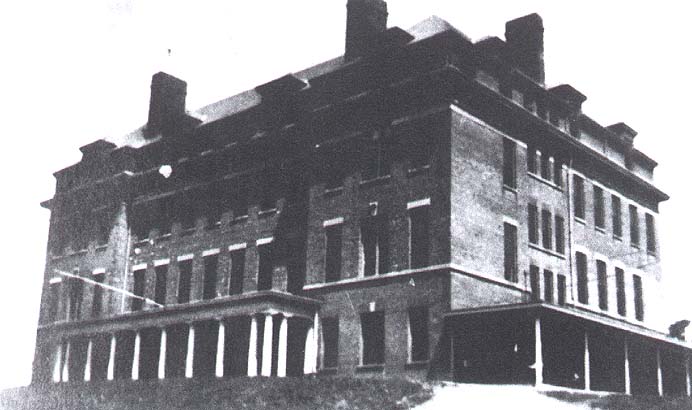
In the early 1900's, tuberculosis was becoming a major problem in America. The booming population of Essex County was no exception. So many people were sick, that two local women proposed  establishing a hospital in the more rural section of the county where they lived. A parcel of land on the second Watchung Mountain which held an abandoned boarding school was suggested to become the new county sanatorium.


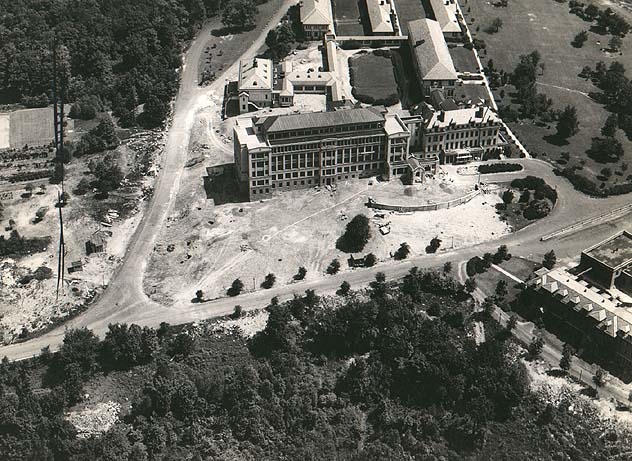
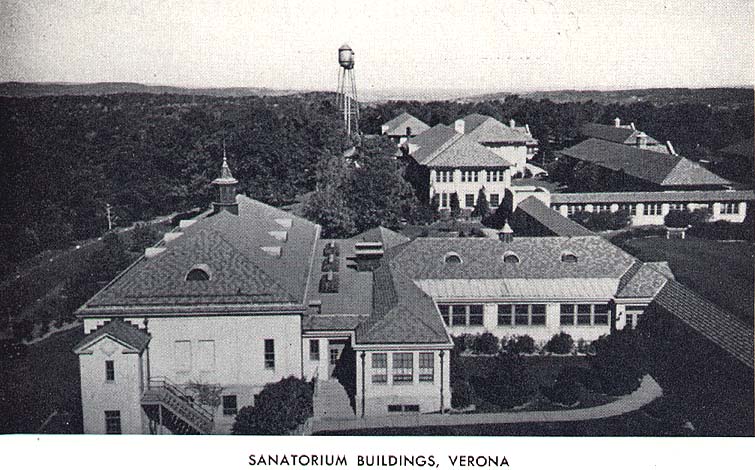
There was just one problem. Some residents of the area did not want the illness to spread from the hospital and start affecting the townsfolk. The group decided to ignore the concerns of the residents, and began sneaking patients into the shuttered boarding school in the middle of the night. Once they had established their presence, it was legally very difficult to evict them. As the disease became more prevalent, Essex County decided to take over the small clinic and expand it to the massive building complex it was. From 1917 to 1930, the county added 21 buildings, to accommodate for the growing population of ill people.


The land on which the hospital sat proved to be ideal, as the quiet scenic setting and fresh mountain air helped the hospital become "The Colorado Springs of the East". The sanatorium boasted a 50% recovery rate, which was almost unmatched by every other sanatorium in the world. The hospital was so efficient in its eradication of the disease, the county no longer needed such a large facility to deal with it. The county closed the sanatorium in 1977, and moved the last few patients to other area hospitals. They also closed the small division operating out of the Freeman Pavilion at the nearby Overbrook Psychiatric Hospital.


The sanatorium fell into serious disrepair, and in 1993 most of the hospital was bulldozed. A few small buildings remained on the complex for over a decade. One of my earliest memories was riding bikes by the former hospital with my father. I saw the dilapidated nurses cottage, and asked him about it. He said it used to be a hospital, but they didn't use it anymore and they were demolishing it soon. For over a decade, I thought that was the last I was ever going to see of the place. But that all changed when I found the tunnel that was still intact.


I had heard about the tunnel from other explorers, but I could never find the entrance. I spent dozens of hours over the years scouring the reservation, to no avail. One day in 2014, my girlfriend and I decided to go for a hike. I was telling her how I had always heard rumors that the entrance was in our general area, but I could never find it. I decided right then that maybe today would be the day. Sure enough, after thrashing around in the tall overgrowth, I found the small concrete opening in the earth.


I called over my girlfriend, and prepared for my descent into the earth. I slid in, which was challenging for a person my size. I didn't have my camera with me, so I was just taking a peek around. I turned to face the hole, and I was frozen by what I saw. Cave crickets. Thousands of them. I quickly popped back out of the hole, and said I would return with my camera when the cold kicks in. A few months later, we headed back with a friend and fellow historian from Old Jersey News.


We didn't spend to long in the tunnel, as it only runs about 50 feet or so. As I walked around this time, I got hit with the real gravity of what we were exploring. It was more than simple exploring, it was something more akin to archeology. We quietly took our photo's, and once again exited the concrete expanse before it came down on top of us.


The buildings of the Essex Mountain Sanatorium may be gone, but the memories of the complex remain. For more info, please visit Rich Kennedy's site