Friday, April 17, 2015

Empty Cloud Monastery

Sitting in the middle of a neighborhood, two blighted monastery buildings sat behind a large stone wall. The main building of the small complex found new use, while two residential buildings and the gatehouse crumbled with time.


I don't know when these beautiful buildings were built, but they are likely over a century old. When the monastery moved to the property they kept the house mostly original, with the addition of some Dalle De Varre windows and cross-lite doors. 


Every bedroom in the home had its own fireplace. 


Despite some peeling paint, the buildings remained in very good shape. 


I would drive by the buildings often, each time making sure to close any doors or windows I found open. I wanted to make sure the property didn't fall into serious disrepair. 


Thankfully someone purchased the property and began renovating the buildings. Before long they were occupied again.


The converted garage on the property had been heavily modified, unlike the home out front. 


But the second floor was much nicer looking. A furnished kitchen greeted me as I ascended the stairs, and the spacious dormitories mostly all had fireplaces as well.


It makes me so happy to drive by the structures now, as I was convinced they would inevitably be demolished. Finally a happy ending for once.

Tuesday, April 14, 2015

The old Essex County Jail

John Haviland, architect of the famous Eastern State Penitentiary, was hired to design the new Essex County Jail in 1837. 


The old prison had succumbed to a fire a few years earlier, and the county decided to go a different way as far as the feel of the prison. The old prison was a nice building, and the prisoners were encouraged to spend their free time productively. The new building was an emotionless stone box.


 The building was small, holding roughly 100 cells. Soon the space in Newark wasn't enough, and a large new annex building was built in North Caldwell.


With the rise in crime and prosecution, both of the prisons expanded. This expansion included a large new cellblock built at the Newark Jail in 1890. The building could now house over 300 prisoners.


The walkways on the different tiers in the cellblocks were made of glass, so the officers could see through them in the event of a commotion. 


While the annex would grow to house thousands of prisoners, this building would go on to stay at 300 cells until it was closed in 1970. It was used up until 1989 by the Essex County Narcotics Bureau, who were the last group to occupy the structure.


 In 1991 it was added to the national register of historic places, and subsequently used in the filming of the movie Malcolm X, but the jail would remain abandoned and neglected until eventually catching fire in 2001. 


The fire gutted part of the structure, and ever since then the building has been totally falling apart.


Despite living within 15 minutes of the building, I have only ever visited the building twice. Once in 2011, and once again just recently. It is basically a ruin, and the future doesn't look very promising for the building. Just another example of how Essex County lets it's history demolish itself.


Saturday, October 25, 2014

The Last Tunnel of the Essex Mountain Sanatorium

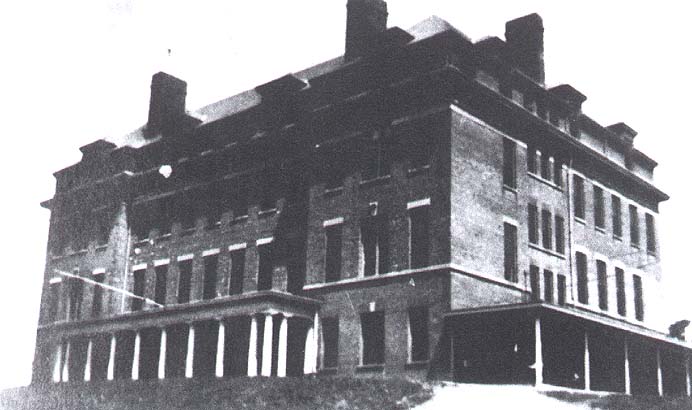
In the early 1900's, tuberculosis was becoming a major problem in America. The booming population of Essex County was no exception. So many people were sick, that two local women proposed  establishing a hospital in the more rural section of the county where they lived. A parcel of land on the second Watchung Mountain which held an abandoned boarding school was suggested to become the new county sanatorium.


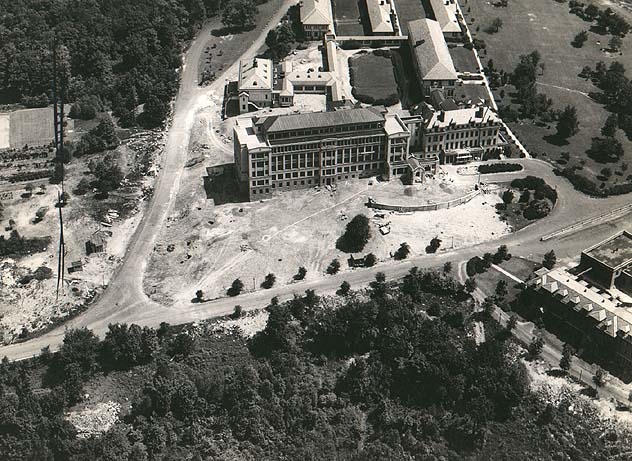
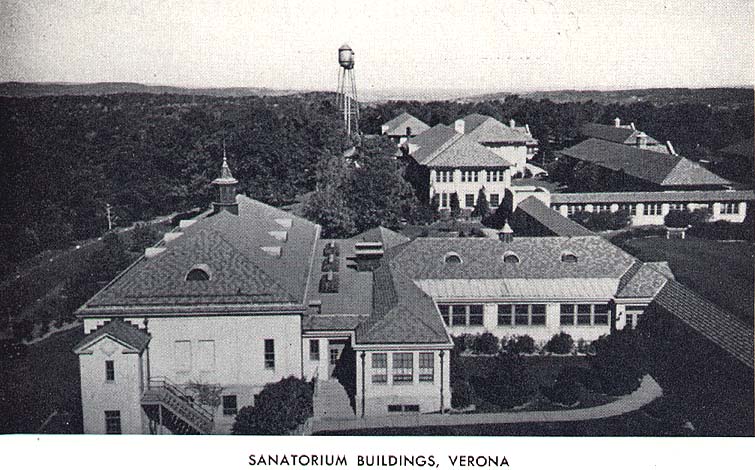
There was just one problem. Some residents of the area did not want the illness to spread from the hospital and start affecting the townsfolk. The group decided to ignore the concerns of the residents, and began sneaking patients into the shuttered boarding school in the middle of the night. Once they had established their presence, it was legally very difficult to evict them. As the disease became more prevalent, Essex County decided to take over the small clinic and expand it to the massive building complex it was. From 1917 to 1930, the county added 21 buildings, to accommodate for the growing population of ill people.


The land on which the hospital sat proved to be ideal, as the quiet scenic setting and fresh mountain air helped the hospital become "The Colorado Springs of the East". The sanatorium boasted a 50% recovery rate, which was almost unmatched by every other sanatorium in the world. The hospital was so efficient in its eradication of the disease, the county no longer needed such a large facility to deal with it. The county closed the sanatorium in 1977, and moved the last few patients to other area hospitals. They also closed the small division operating out of the Freeman Pavilion at the nearby Overbrook Psychiatric Hospital.


The sanatorium fell into serious disrepair, and in 1993 most of the hospital was bulldozed. A few small buildings remained on the complex for over a decade. One of my earliest memories was riding bikes by the former hospital with my father. I saw the dilapidated nurses cottage, and asked him about it. He said it used to be a hospital, but they didn't use it anymore and they were demolishing it soon. For over a decade, I thought that was the last I was ever going to see of the place. But that all changed when I found the tunnel that was still intact.


I had heard about the tunnel from other explorers, but I could never find the entrance. I spent dozens of hours over the years scouring the reservation, to no avail. One day in 2014, my girlfriend and I decided to go for a hike. I was telling her how I had always heard rumors that the entrance was in our general area, but I could never find it. I decided right then that maybe today would be the day. Sure enough, after thrashing around in the tall overgrowth, I found the small concrete opening in the earth.


I called over my girlfriend, and prepared for my descent into the earth. I slid in, which was challenging for a person my size. I didn't have my camera with me, so I was just taking a peek around. I turned to face the hole, and I was frozen by what I saw. Cave crickets. Thousands of them. I quickly popped back out of the hole, and said I would return with my camera when the cold kicks in. A few months later, we headed back with a friend and fellow historian from Old Jersey News.


We didn't spend to long in the tunnel, as it only runs about 50 feet or so. As I walked around this time, I got hit with the real gravity of what we were exploring. It was more than simple exploring, it was something more akin to archeology. We quietly took our photo's, and once again exited the concrete expanse before it came down on top of us.


The buildings of the Essex Mountain Sanatorium may be gone, but the memories of the complex remain. For more info, please visit Rich Kennedy's site

Friday, June 13, 2014

Vibra Screw

This building is one of the things I love to write about most; the building sitting on the side of the road that thousands of people pass by everyday. I remember passing by this warehouse a number of times as a child. The road it's on is a cut through between two busy streets that we found ourselves on often. This was before I really was interested in exploring, but I remember wondering what the building used to be, and why it was abandoned.


Over the years I forgot about the structure, until the first spring break I had my license. Thinking that surely others had to be interested in what the building was, I headed over to see if I could find my way inside.


As luck would have it, I managed to find a door that was ajar. I carefully entered the warehouse with my friend at my back, thrilled that I was going to be able to see what had long been a mystery to me.


The place felt enormous inside. The main sections of the warehouse had gigantic circular holes in the walls, which had since been cinderblocked up.


I came to find out afterwards that this building was built in the 1940's. It used to be part of the Curtiss-Wright aircraft manufacturing company, who were instrumental in constructing aircraft for the United States Air Force during World War II. The reason for the large holes in the walls were because this structure used to be the wind tunnel area for testing the aircraft's engines. While most of the enormous complex was demolished and re- used as an airport, this building went on to be used by a number of machining companies, most notably Vibra Screw. After that the building started being used as a warehouse.


From everything I have seen and read since my visit, it seems like the last time the building was actively being used was the 1990's. I couldn't find and information about why the building was abandoned however.


The structure still held one more secret. As we walked into one of the chambers, we saw the outlines of three cars. A Jeep, a Cadillac, and some kind of car from the 1920's or 30's. I couldn't believe somebody could let a historic vehicle like this just rot away. I was disappointed to find most of the cars had been run through by thieves, and the damage was probably more than the value of the vehicles.


After posting some photo's online, I found out that another explorer had found his way inside the structure a few years before me. After he had posted his findings online, he was confronted by local police officers who tracked the photographs back to him. He was charged at the owners request, but the case was eventually dropped. Still, a few members of the online exploring community were quick to mention it, and tell me that it would probably be in my best interest to take the photos down.


However, this incident was years before my time. It was before the online community had developed into what it was now, and I stubbornly dismissed their suggestions. Nothing ever came of it for me, nor the others who went after me. Since my visit nothing has happened with the structure, other than a "For Sale" sign being posted on the fence. I really have no idea what will happen with this forgotten piece of history. Nobody seems to care about the building's past, and probably fewer care about it's future. But considering what an eyesore the exterior is, and the fact it sits alongside a busy road, it will probably only last a few more years and then end up an empty lot.

Monday, June 2, 2014

The St. Mark Church

This church dates back to 1827, when a local parish decided to spread out from their main building in Newark. Before long, the new group grew into the most wealthy offshoots from the main church.


In 1860, the parish began working on their building as West Orange began to change. A large steeple was built onto the front- left side of the building, as well as some other changes to the structure. The additions, which were in a Gothic Revival style, were designed by famed architect Richard Upjohn.


The church was very influential in the history of West Orange, operating the first elementary and high schools in town.


The group was dwindling by the 1960's, and they were running out of money. It was added to the NRHP in the 1970's, but without the money to properly maintain the building the church soon began to fall apart. Preservation New Jersey listed it as one of the top 10 most endangered historic places in the state in the 1990's.


Despite the church's conditions, different groups held services in the building over the next decade. The current signs on the church said that a Spanish congregation was occupying the structure. However, the tall grass and boards on the doors said otherwise.


The last group to occupy the building left in 2009, and since then water has worked its way into the structure. A section of the roof above the altar area had started to show signs of damage, shedding shingles and slowly buckling.


Signs of hope emerged though, as groups had been seen touring and doing work to the structure in late 2013. The building has been re- secured, and I believe most of the relics left by the last congregation were removed at this time. The church building was officially sold in 2015, and the new  owners did a bunch of work to the structure.  This included illegally removing several of the windows of the historic building. The beautiful old stained glass was removed and several tiny vinyl windows were installed as replacements.


Then on the first day of 2016, residents awoke to news that the church was being gutted by a large fire. Sure enough, the three alarm blaze completely destroyed the St. Marks Church. The renovation of the structure was supposed to give the building a new life. After the the brazen removal of the windows, it was clear to many that the buildings new life was not going to be what we expected. But we didn't anticipate it to  be so short. After the fire the congregation was ordered to completely rebuild the church exactly as it appeared outside. This included putting the windows back, however I believe they were either discarded or destroyed in the fire. Work has been progressing, and right now it just looks like any other abandoned church being restored. Hopefully the building can get a new life and shine once more.

Monday, May 26, 2014

J.T.'s Fun Zone

I remember going to J.T.'s as a kid, for birthday parties and such. It was always packed. The skating rink, the arcade, the pools; all filled to the brim with energetic young people.


It opened in 1995, a few years after I was born, so naturally I  found my way there quite often.


In addition to what was mentioned above, they had basketball and racquetball courts, a number of bars, a club, a skatepark, pretty much everything young adults do to fill their time.


As anybody can imagine, with all the danger associated with these activities, there were a number of health and safety standards violations. The indoor amusement park was in constant legal battles circulating around the fatalities and injuries incurred by those who partook in the buildings activities.


The building was shut down in 2003, due mostly to controversy regarding the nightclub housed in the venue. A young, under aged girl was sexually assaulted by a DJ and the club's assistant manager.


In addition to those charges, there were also a number of drug violations and underage alcohol consumption complaints. The venue's owner was issued a number of citations for these actions.


The building was reopened for a short time, but was closed once again at the passing of Jerry Turco, the buildings owner.


It wasn't until I had already been checking out these historical locations for a couple years that I remembered that the medium sized warehouse off of Pleasant Valley Way even existed. I recruited a friend and headed over to the building.


We peeled back a loose board and hopped inside the moldy, moist building. We walked around, took our photo's, and left.


Shortly after I posted the photo's online, I was asked about the place by a number of other photographers. People started flocking to the blighted recreation facility, and unfortunately the vandals came too.


In April of 2011, the building was set on fire by arsonists. The three alarm fire was the last straw for the town, who began to take matters into their own hands.


Demolition of the venue was paid for by the Estate of Jerry Turco, who passed away in the 2000's. It took a while for the building to be taken down, for reasons not clear to me. But by the end of 2012, it was nothing more than a dirt lot.


The plot is apparently supposed to be used to house a new power management facility for the town of West Orange. Not a whole lot has been accomplished on that front, however. While not a terrible loss in terms of lasting history and architecture, it was sad to see JT's go. Just another one of the locals childhood memories gone by the wayside in terms of "progress".